Simply Short
Euro area economy improving even amid crises
The war in Iran and other crises are pushing up energy prices and adding to uncertainty in the euro area. Uncertainty undermines the economic outlook, as it has a restraining effect on consumption and investment. However, the euro area economy has shown good resilience. The improvement in the economy is being underpinned especially by the service sectors, household consumption and investment. Higher energy prices have driven up the euro area’s inflation rate, which refers to the rate of increase in the prices of goods and services. The inflation target for the euro area is 2%, and currently the inflation rate is above this. The European Central Bank (ECB) has raised its key interest rates twice this year, with the aim of returning inflation to target.
- The euro area economy has proven more resilient to the Middle East energy shock than expected.
- Most important among the drivers of growth in the euro area are domestic demand, persistently robust employment, and defence, infrastructure and AI investment.
- Higher energy prices have pushed up inflation significantly beyond the target. The ECB has raised its key interest rates to support a return of inflation to the 2% target.

This is an English summary of the Monetary Policy Review article published by the Bank of Finland in Finnish on 6 October 2026. The full Monetary Policy Review is published only in Finnish.
Middle East war has driven up energy prices
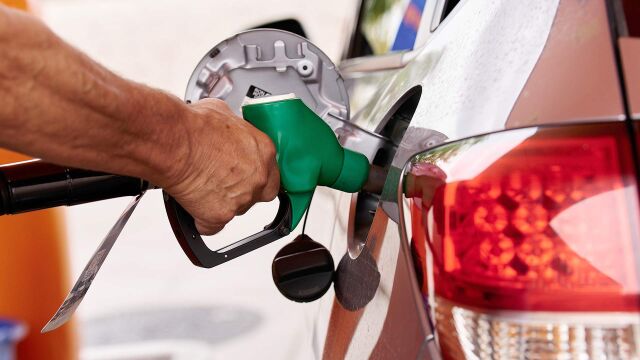
During the course of this year, the crisis in the Middle East has weakened the growth outlook for the global and euro area economies. The crisis has substantially driven up the prices of oil, natural gas and certain other commodities, as well as refined petroleum products like petrol and diesel. At the same time Russia’s continuing war in Ukraine is maintaining uncertainty within the international economy.
Growth in the global economy is being underpinned by technology industry investments and by the gradual strengthening of world trade. However, the rise in interest rates has made borrowing more expensive. The outlook for the economy is still affected by considerable uncertainty, particularly regarding the future path of energy prices.
Growth in euro area economy gradually picking up
Economic growth in the euro area this year has been more solid than anticipated. After stalling at the start of 2026, economic growth began to recover in the spring, and, in addition, both business and consumer confidence strengthened during the summer. Growth in the euro area economy is gradually broadening out into an increasing number of economic sectors.
Since the COVID-19 pandemic, the service sectors have performed more strongly than manufacturing, and this services growth has been underpinned by a gradual strengthening of domestic demand. (See the article by Nelimarkka and Vilmi ‘Services have been driving the euro area economy, but productivity growth has rested on only a few industries’.) In the immediate years ahead, an important source of growth will be investment.
The euro area labour market has remained fairly robust despite the slow growth in the economy. The unemployment rate is still exceptionally low. Employment has been rising, though at a slower rate than earlier.
Household income has been underpinned by stable employment growth and an increase in nominal wages, although the rise in real purchasing power has been slowed by higher energy prices. Consumption is expected to increase gradually, but households are still saving and are cautious in their spending.
The weak trend in manufacturing growth has long persisted, but appears now to have stabilised. More orders are being received than before, and the outlook has improved slightly. However, a distinct upturn in growth has not yet been evident, as euro area manufacturing is adversely affected by persistently high energy costs, tougher international competition and structural factors that weaken competitiveness. The euro area has also fallen behind its competitors in AI-related investment and know-how.
Business investment is being slowed by economic uncertainty and by high borrowing and energy costs. Nevertheless, countering this to a significant extent are projects that concern digitalisation, artificial intelligence (AI), energy networks, infrastructure and defence, which are supporting overall investment growth. Spending on infrastructure and defence, particularly by Germany, is underpinning investment and boosting demand elsewhere in the euro area too.
As a whole, the euro area economy seems to be coping with the present crises without any serious slump in growth. The main risk to the growth outlook is that energy prices will remain high for a long period. This would, at the same time, weaken household purchasing power, business profitability and the demand for goods and services from outside the euro area. Trade disputes between different countries may also undermine the growth outlook. On the other hand, growth could be unexpectedly boosted if energy-related disruptions ease more quickly than anticipated, if households start to spend some of their savings, and if the impact of investments in infrastructure, defence and technology is broader across the euro area economy than expected.
The euro area economy is expected to grow slowly, but this growth will gradually gather pace. In the immediate years ahead, growth in the euro area economy will rely above all on domestic demand, services and investment, whereas net exports will have only a minor effect on growth.
Cost of borrowing has risen, but no serious market disruptions have occurred
The rise in energy prices caused by the Middle East crisis was quickly reflected in financial markets. The ECB raised its key interest rates in June and again in September, as higher energy prices drove up the rate of inflation. Consequently, market interest rates and the business loan and mortgage rates offered by banks have also risen.
The total stock of business loans has continued to grow, and there was a slight increase in the demand for such loans during the spring. At the same time, banks have moderately tightened the terms on which they grant loans to businesses. Businesses have been borrowing to fund investment and to cover rising costs. By contrast, households have sought loans slightly less actively than before, because of the rise in interest rates, the subdued level of consumer confidence and the weakened outlook for the housing market.
Nevertheless, the financial markets have reacted to the energy crisis fairly calmly. In the early stages of the crisis, there was only a temporary increase in risk premia on business loans, that is, in the costs that a borrower has to pay for the lender to assess loan-related risks. The drop in share prices was also short-lived, and there has been no large-scale market disruption. This indicates that investors consider the effects of the crisis to be manageable for the time being, despite the increase in geopolitical uncertainty.
Inflation expectations have remained stable
In 2025, inflation in the euro area was close to the ECB’s 2% target, but the situation changed with the war in Iran and the subsequent increase in energy prices. The higher energy prices have also begun to be transmitted gradually to the prices of certain other goods and services, although the effects have so far focused on energy and on industries that use substantial amounts of energy. No broad-based strengthening in the spiral of wages and prices has been evident. (See the article by Anttonen, Jokiluoma and Lehmus ‘Recent supply disruptions in the energy market have affected euro area inflation expectations’, and the article by Vilmi ‘The effects of energy shocks on inflation vary surprisingly widely over time’.)
The future path of inflation depends largely on the duration of the energy shock. Business surveys show that the pressures on businesses to raise their prices have eased since the summer, and long-term inflation expectations are still at around 2%. The ECB estimates that inflation will rise slightly in the remaining months of 2026 and will remain well above target for an extended period into 2027. However, inflation is projected to fall during 2027 and return close to 2%. The risks related to inflation nevertheless mainly concern the risk that inflation may be higher than expected, as a prolonged energy shock could amplify the transmission of costs to prices and wages. Uncertainty over the economy is high.
chart 1.Euro area economy improving even amid crises